


So you’ve got your product idea down, and it’s time to find the proper manufacturer to help you turn your vision into reality. As you scour the market for potential partners, you realize this is a complex yet vital step that requires thorough planning, as partnering with seasoned manufacturers can determine your brand’s success.
This guide on how to choose a custom plastic injection molding service goes through a detailed set of criteria for selecting injection molding manufacturers that understand resin science, tooling engineering, and scalability.
Three-Step Planning Checklist: Defining Your Molding Requirements
Follow this three-step planning checklist to guide your search for a reliable partner.
1. Distinguish Between Custom Molders and Brokers
Although custom molders, also called custom processors, and brokers may seem similar, they differ in ways that give one option an advantage over the other. Be mindful of these key distinctions before beginning your search:
- Custom Molders: These are companies that do everything themselves, like The Plastek Group. From designing your package to employing engineers and handling injection molding, they provide the tailored, personalized experience your brand deserves.
- Brokers: These are the intermediaries who outsource your molds to third-party factories. Because of the unknown variables involved when dealing with brokers, it’s challenging to achieve consistent quality and results.
By understanding the differences between the two, you can narrow your search to custom molders. With their in-house processing and manufacturing, they can help you meet customer demand by offering a complete plastic manufacturing package. Working with custom molders also eliminates risks involved when dealing with brokers and lets you set a standard that customers can expect from your products.
2. Weighing Domestic vs. Overseas Tooling and Molding
Choosing between domestic and overseas manufacturers can be the difference between quality plastic packaging and delayed shipments. To know which will suit your business better, consider their differences in areas like:
- Total Production Costs: While overseas manufacturers may offer lower up-front costs, they often incur high logistics fees that offset those savings. Domestic partners typically have lower total landed costs by minimizing shipping fees, lead times, and shipping risks.
- Order Volume Capabilities: As overseas partners are labor-intensive and staff more workers on average, they can process a higher volume of orders. Meanwhile, domestic partners can have upper limits on volume due to their relatively limited workforce.
- Quality Control Standards: Overseas manufacturers usually prioritize speed and quantity over quality. If you wish to set a high standard for your plastic packaging, choose domestic partners as they follow strict quality control regulations.
- Sustainability And Labor Practices: Consumers are now willing to spend an average of 9.7% more for ethically sourced and produced goods, so be careful with overseas partners who don’t adhere to labor and sustainability laws. Domestic partners reduce this risk by following strict federal regulations, but remember to assess each company’s environmental and social policies to find the right fit.
3. Audit Regulatory and Quality Standards
Ensure that your chosen manufacturing partner adheres to strict quality standards set by the International Organization for Standardization (ISO) and the U.S. Food and Drug Administration (FDA). Each industry has different regulations, such as:
- Medical and Pharmaceutical: Manufacturers must comply with ISO 13485 standards, use ISO Class 7 or 8 Cleanrooms, and meet the FDA’s toxicology testing requirements for cosmetics.
- Food and Beverage: Partners must follow FSSC 22000 standards and the FDA’s general regulations for this type of product.
- Sustainability Claims: Ask for ISCC PLUS certification to verify the presence of recycled materials in a manufacturer’s packaging.
- General Manufacturing: Confirm that your partner holds ISO 9001 certifications for most or all of their facilities as a baseline for process consistency.
How to Choose a Custom Plastic Injection Molding Service
Now that you know what to look for in plastic injection molding companies, here are five steps you can follow to learn how to pick a plastic injection molding company that will be a reliable partner for your business:
1. Shortlist Candidates by Technical Capability
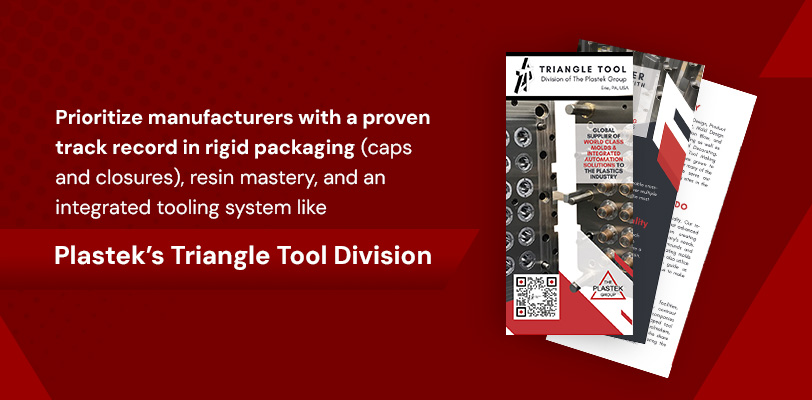
Begin your search by prioritizing manufacturers with a proven track record of technical capability and industry success. Specifically, look for partners with expertise in rigid packaging like caps and closures, an integrated tooling system similar to Plastek’s Triangle Tool division, and resin mastery.
You can do these by following these strategies for each manufacturer you find:
- Verify their credibility by visiting their website and checking ISO certifications.
- Connect with their past clients to ask about their experience.
- Check for case studies that showcase their success in scaling high-volume projects.
2. Audit the Facility’s Equipment and Automation
Once you’ve shortlisted candidates, visit their facilities to check their equipment and automation systems. Inside, look for the following:
- Automation And Robotics: Check the presence of robotics for automated part assembly and removal to ensure consistent cycle times during high-volume runs.
- In-House Tool Room: Validate whether they have dedicated rooms for immediate mold maintenance and repairs to prevent prolonged downtime in your supply chain.
- Quality Control Technologies: Confirm the presence of Coordinate Measuring Machines (CMMs) to ensure every part undergoes thorough defect detection.
- General Cleanliness: Verify the cleanliness and organization of their facility, as a disorganized floor signals poor quality control and practices.
3. Request and Analyze Quotes
Gather quotes from your shortlisted manufacturers, and ask about the following to confirm their total cost of ownership:
- Up-front tooling costs
- Amortization terms
- Piece price
- Minimum order quantities (MOQs)
- Lead times
- Logistics responsibility
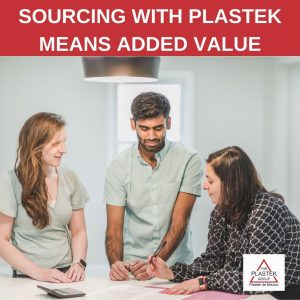
4. Evaluate Engineering and Value-Added Services
You must also check their technology capabilities, particularly in CAD and 3D model rendering. Manufacturers with experience in tools such as Creo, Luxion Keyshot, Autodesk Moldflow, and Stratyts indicate deep design and technical proficiency.
You may also ask about any additional services, such as silk screening or pad printing, in-mold labeling (IML), and sonic welding, that could add value to your partnership.
5. Validate With Pilot Runs and Finalize Terms
Before committing to full production, validate your design by requesting samples from your candidates to compare fit, design, and turnaround times. Once you have chosen a partner who fully understands your needs, finalize your contract and ensure that you own the mold and that your manufacturer is responsible for its maintenance and longevity.
Why Partner With Plastek
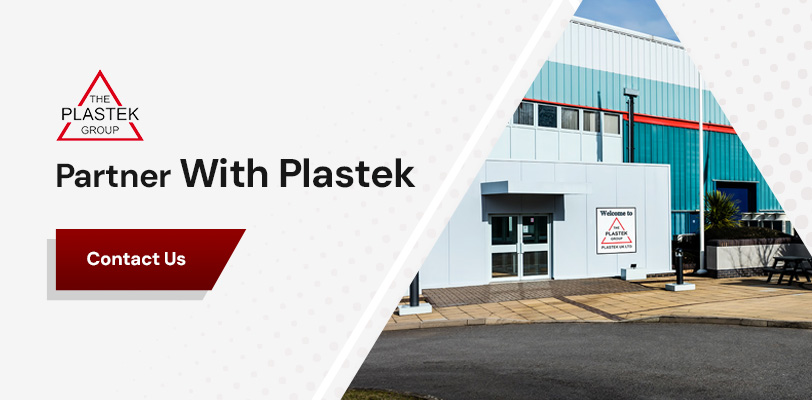
If you’re looking for a global one-stop shop for expert custom plastic injection molding, turn to Plastek. We specialize in designing, creating, and manufacturing rigid plastic packaging that helps businesses build their brand. We have facilities in Pennsylvania, the United Kingdom, and Brazil that are ISO-certified.
With over seven decades of experience and a team of expert engineers, we deliver quality results with every project. Interested in learning more about our mold design and manufacturing services? Contact us today and let us help your brand succeed with plastic injection molding.